
How to Copy Paste on a Mac (Complete Guide)
Copy and paste on a Mac is mostly the same three shortcuts you already know, but macOS has a handful of extra tricks — a built-in clipboard history workaround, a plain-text paste shortcut, and some quirks specific to switching from Windows — that are worth knowing if you want to actually get the most out of it.
The basics
- Copy: Cmd + C
- Cut: Cmd + X
- Paste: Cmd + V
- Paste and Match Style (plain text): Cmd + Option + Shift + V, or Edit menu → Paste and Match Style
- Undo: Cmd + Z
- Select all: Cmd + A
The switch from Windows: the most common mix-up
If you regularly use both a Mac and a Windows machine, the single most common slip is reaching for Ctrl instead of Cmd out of habit. Macs do still recognize Ctrl for some system-level shortcuts, but copy and paste specifically requires Cmd — this catches almost everyone who splits time between both platforms at some point.
Copying files, not just text
To copy a file in Finder, select it and press Cmd + C, then navigate to the destination folder and press Cmd + V — the same shortcut pattern as text. macOS also supports Cmd + Option + V in Finder specifically, which moves the file instead of copying it, useful for relocating files without a separate cut step.
Mac's clipboard limitation: no built-in history
Unlike some mobile keyboards, macOS only remembers the single most recent copy — there is no native clipboard history. If you copy something new before pasting the previous item, the first one is gone. Third-party clipboard manager apps exist specifically to solve this, but for occasional use, pasting the current item somewhere safe before copying something else is the simplest workaround.
Copying between a Mac and other devices
Mac to iPhone or iPad (same Apple ID)
Universal Clipboard covers this automatically when both devices are signed into the same Apple ID with Wi-Fi, Bluetooth, and Handoff enabled — copy on one, paste on the other, no extra steps.
Mac to a Windows PC, or to any device not signed into the same Apple ID
There is no built-in bridge here. A browser-based tool like CopyPaster fills this gap — open it on both devices over the same Wi-Fi, and text pasted on one appears on the other instantly, regardless of what accounts either device is using.
Tip: if Universal Clipboard between your Mac and iPhone stops working, it is almost always one specific setting (Bluetooth, Wi-Fi, or Handoff) turned off on one of the two devices — check each individually rather than assuming the whole feature is broken.
The bottom line
Mac copy-paste is simple day to day, with the real friction showing up specifically when crossing to a non-Apple device or needing more than the single most recent clipboard item. Knowing the plain-text shortcut and having a cross-platform fallback ready covers the situations where the built-in tools stop being enough.
Frequently Asked Questions
QWhat is the copy paste shortcut on a Mac?
Cmd + C to copy, Cmd + X to cut, and Cmd + V to paste. Use Cmd + Option + Shift + V or Edit menu Paste and Match Style to paste as plain text.
QDoes Mac have a clipboard history?
No, macOS only retains the single most recent copy natively. A third-party clipboard manager is needed for a history of multiple copied items.
QHow do I copy paste between a Mac and a Windows PC?
There is no built-in bridge between the two. Use a browser-based tool like CopyPaster on both devices over the same Wi-Fi to sync text and files.
Related articles
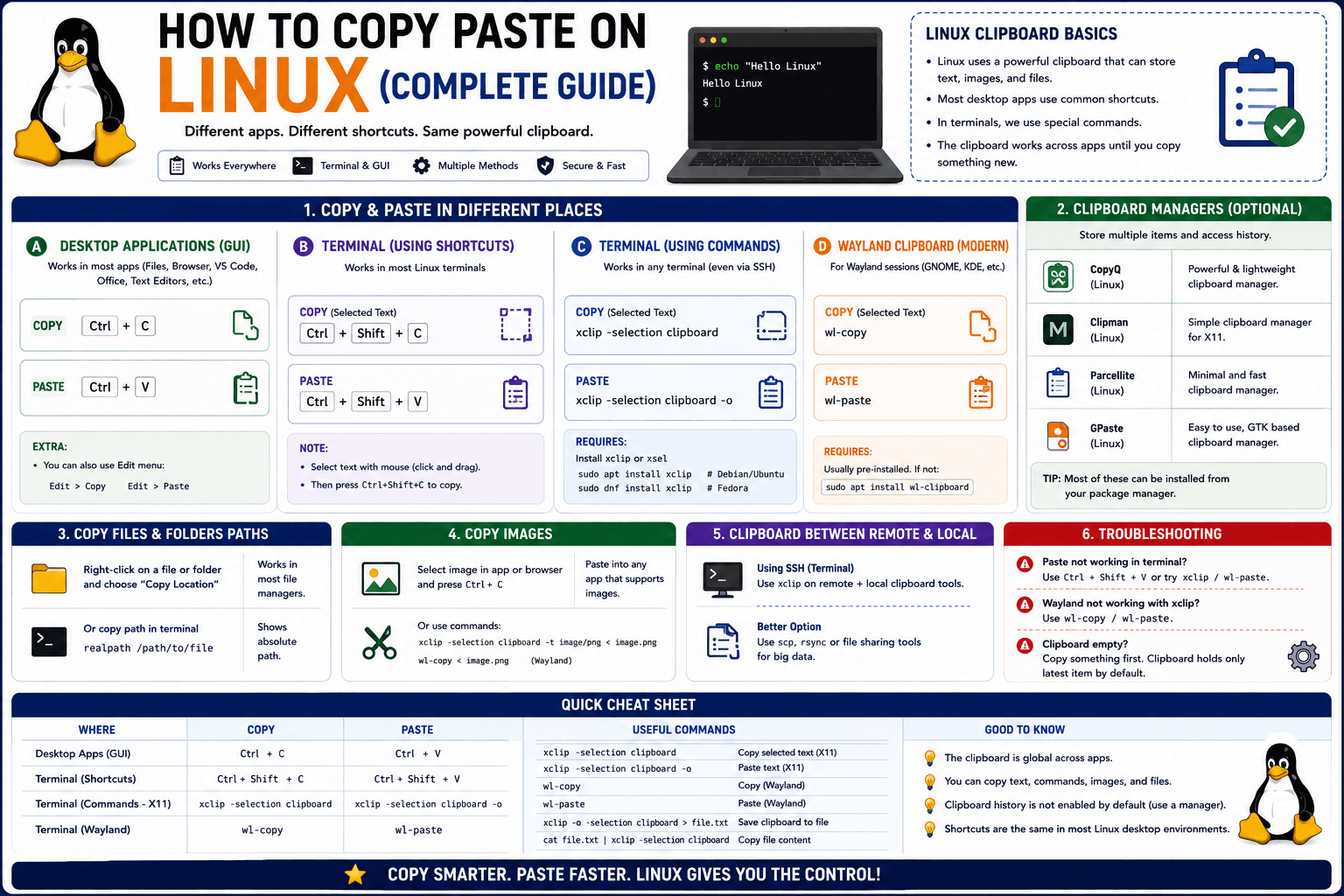
How to Copy Paste on Linux (Complete Guide)
Linux quietly runs two separate clipboards at once. Understanding both explains most copy-paste confusion, plus how to sync with other operating systems.
Read article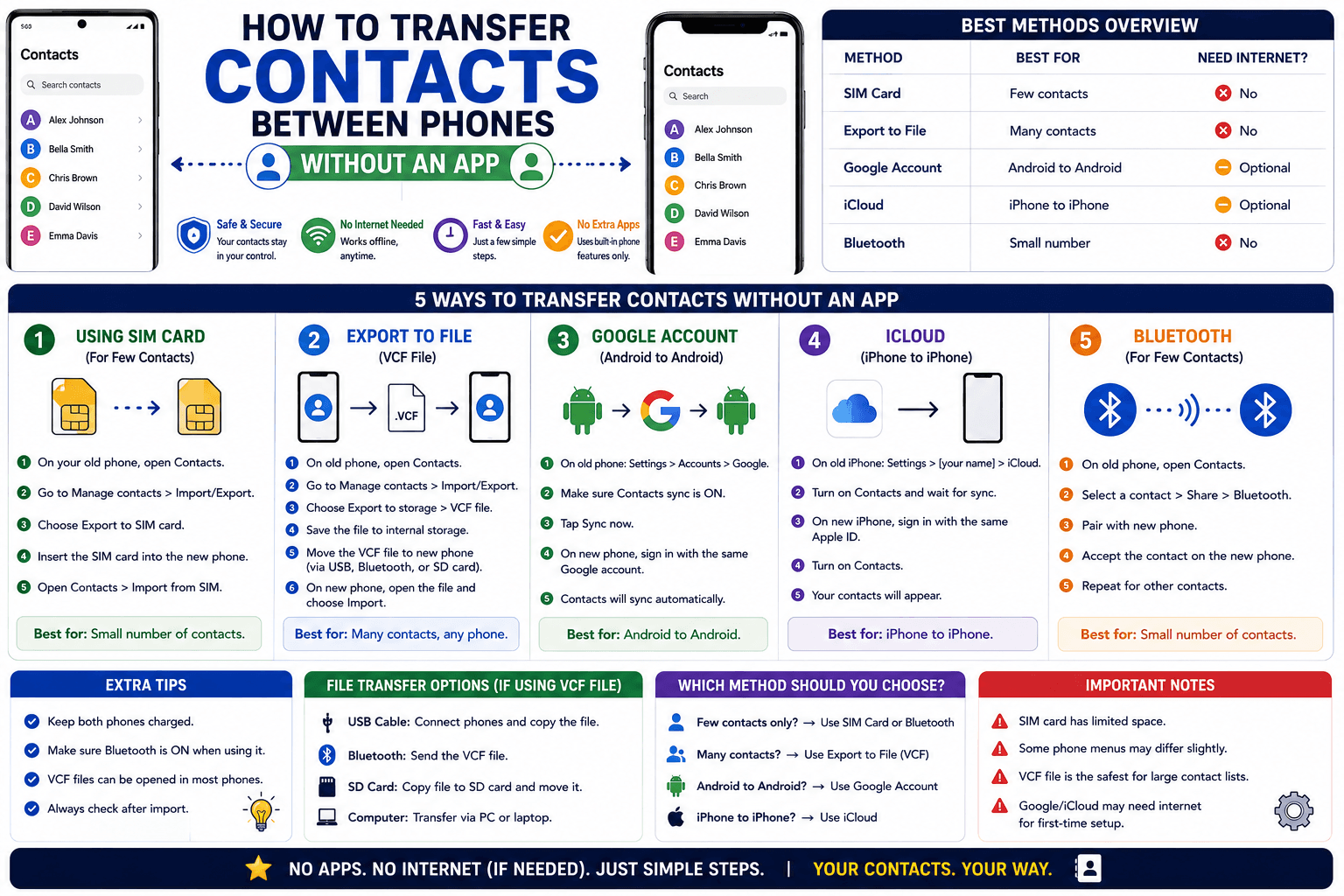
How to Transfer Contacts Between Phones Without an App
Moving to a new phone does not require a third-party transfer app. Here is how to move contacts using built-in sync or a quick vCard file export.
Read article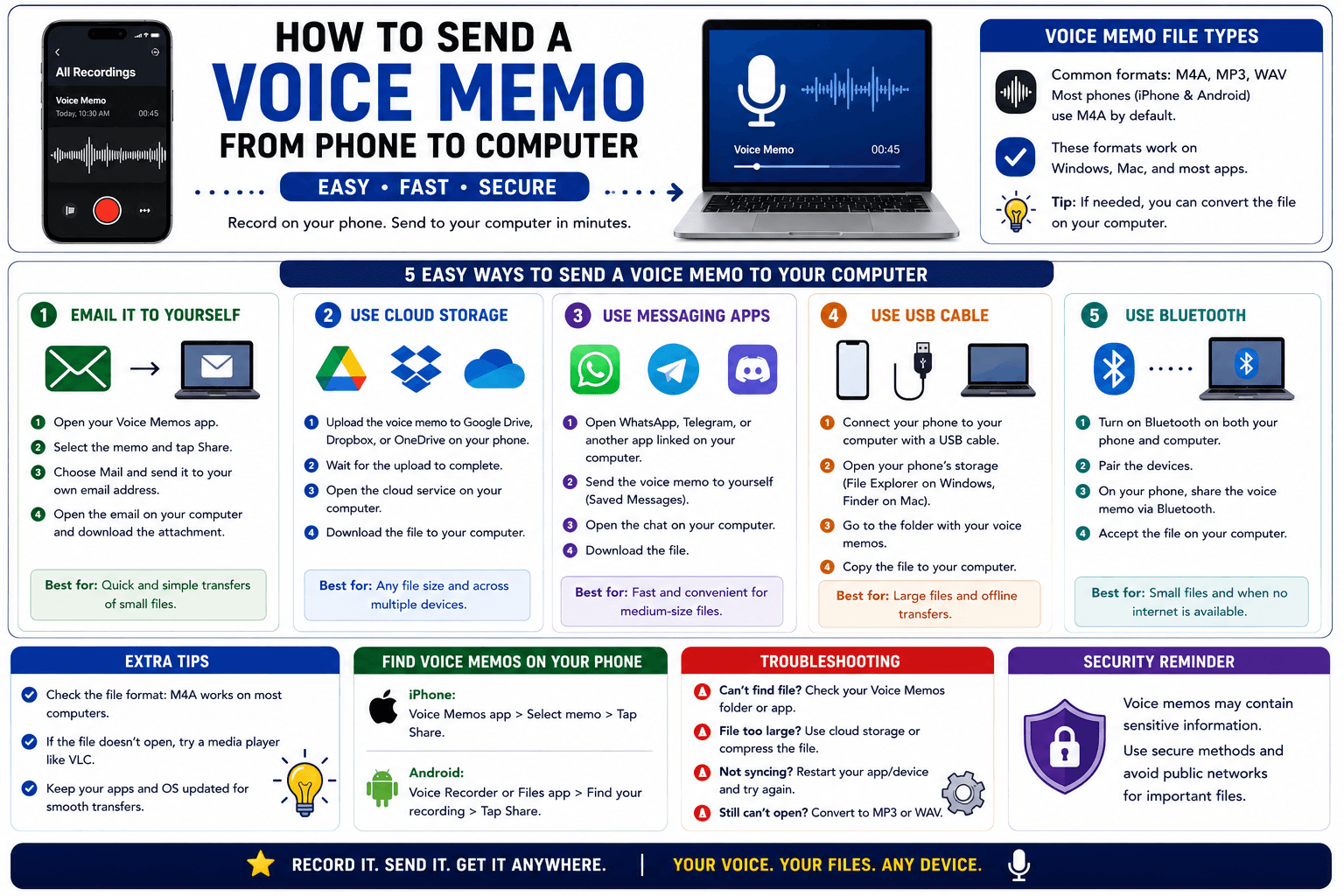
How to Send a Voice Memo From Phone to Computer
Voice memos are locked inside their app until you export them. Here is how to move a recording from your phone to your computer quickly once exported.
Read article