
How to Share Text and Files Over Wi-Fi Without Creating an Account
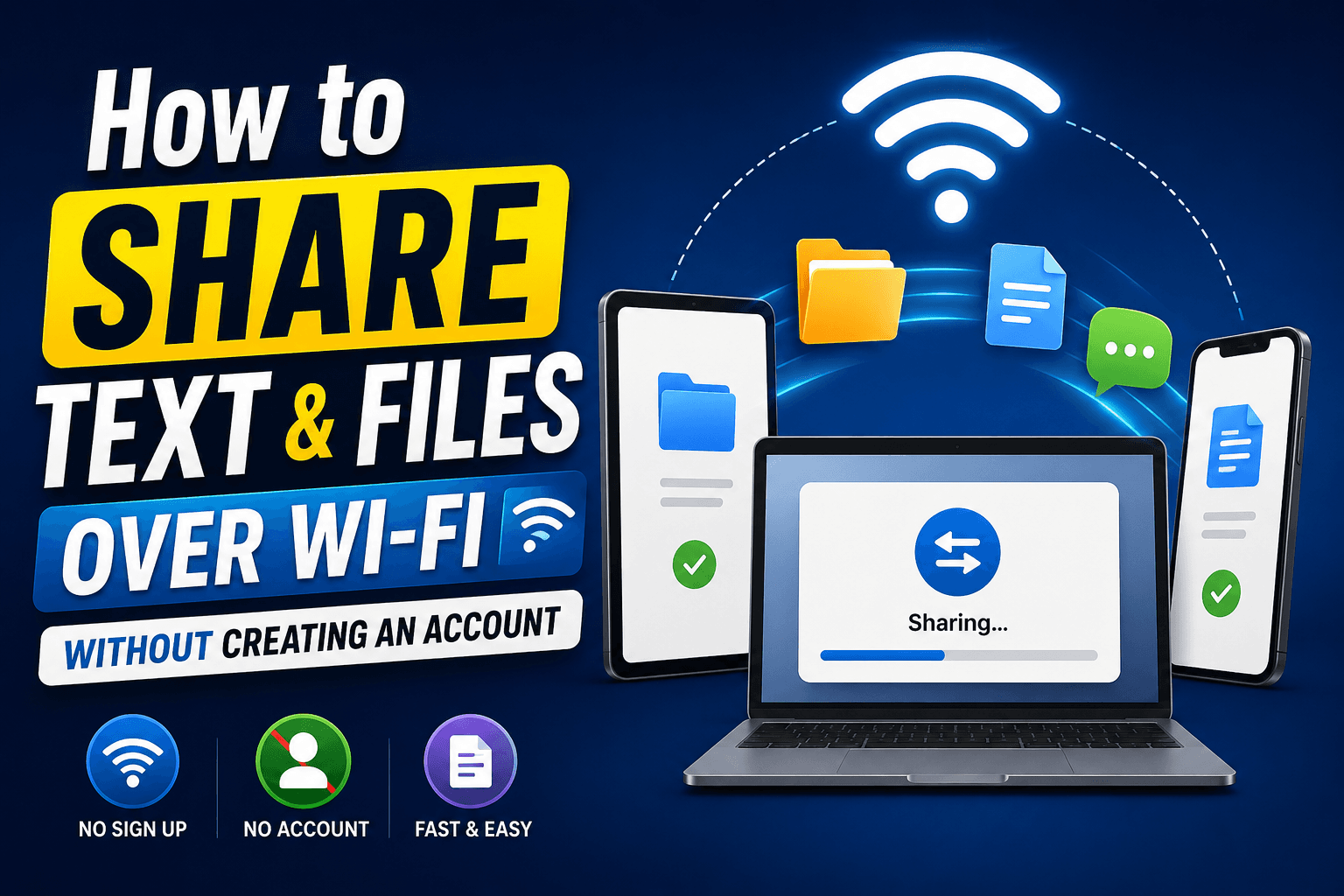
You are on guest Wi-Fi at a coffee shop, a client's office, or a conference hall, and you need to pass a link or a short note from your phone to your laptop. Creating an account for a one-off transfer feels like overkill, and most of the tools that promise to help ask for a sign-up, an email verification, or an app install before they will do anything. Here is how to share text and files over Wi-Fi without any of that.
Why account-based tools slow you down
Cloud drives, note-syncing apps, and messaging platforms are all excellent tools — for ongoing use. Every one of them, though, asks for the same upfront cost: create an account, verify an email, sign in on a second device, grant permissions. For a transfer that takes ten seconds once it starts, that setup is the entire bottleneck.
On a network you do not control — guest Wi-Fi, a client's office, a conference hotspot — installing something new or signing into a personal account is also not always something you want to do at all.
The network-based room: no login, no install
CopyPaster works differently by using the network connection itself as the identifier. Every device that shares the same public IP address — meaning every device on that particular Wi-Fi — is placed into the same temporary room automatically. There is no account to create and nothing to install; opening the site in a browser is the entire setup.
Step by step
- Connect both devices to the same Wi-Fi network.
- Open CopyPaster in a browser on each device.
- Check that the room key displayed on both screens matches.
- Use the Text tab for notes and links, or the Files tab for documents and images.
- Whatever you paste or upload on one device appears on the other in real time.
Because nothing is tied to an account, closing the browser tab ends the session — there is no lingering login to remember to sign out of on a shared or borrowed machine.
Good uses for a shared Wi-Fi room
- Passing a link from your phone to a conference room laptop for a presentation.
- Sharing a Wi-Fi password or a short note with someone else on the same network.
- Moving a document from your phone to a borrowed or public computer without signing into anything.
- Quick chat between your own devices while troubleshooting one of them.
Tip: on a public network, anyone else connected to the same Wi-Fi shares the same public IP and could potentially see the same room. Keep what you share there non-sensitive, and clear it when you are done.
Getting a reliable connection every time
- Turn off mobile data on your phone. If your phone falls back to cellular data, it will land in a different room than a device on the Wi-Fi.
- Watch for guest network isolation. Some office and hotel networks separate devices from each other even on the same Wi-Fi name; if room keys do not match, this is often why.
- Clear the room before you leave. It is good practice on any shared network, and takes one tap.
- Keep it to text and light files. The method is built for quick handoffs, not as a long-term storage spot.
When you actually need an account
If you are sending something you will need again later — a document you are actively collaborating on, a password you share long-term — an account-based cloud drive or password manager is the right home for it. The network-based room is built for the transfer itself, not for storage. Use each tool for what it is good at.
The bottom line
Not every file or note needs an account attached to it. When you and another device are on the same Wi-Fi, a shared room built around that connection gets text and files across in seconds, with nothing to sign up for and nothing left behind. Try it the next time a coffee shop hotspot is the only thing standing between your phone and your laptop.
Frequently Asked Questions
QCan I share files over Wi-Fi without creating an account?
Yes. A network-based room like CopyPaster groups devices on the same public IP into the same temporary space automatically, with no sign-up required.
QIs it safe to use on public or guest Wi-Fi?
It works well for quick, non-sensitive transfers. Because others on the same public network could share the room, avoid pasting passwords or confidential documents there.
QDo both devices need to be on the exact same Wi-Fi?
Yes, both devices need to route through the same public IP address. A phone on mobile data instead of the Wi-Fi will land in a different room.
Related articles
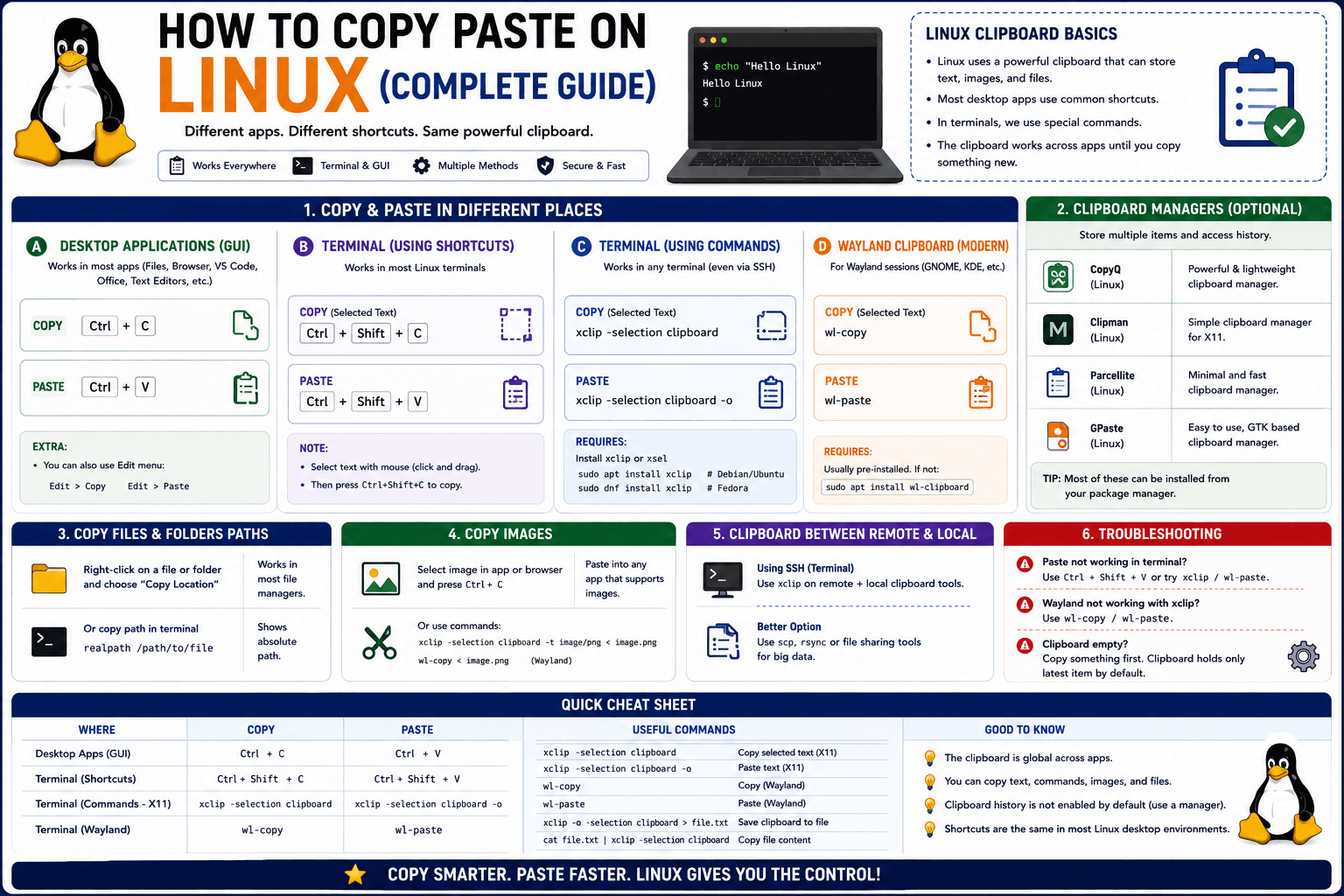
How to Copy Paste on Linux (Complete Guide)
Linux quietly runs two separate clipboards at once. Understanding both explains most copy-paste confusion, plus how to sync with other operating systems.
Read article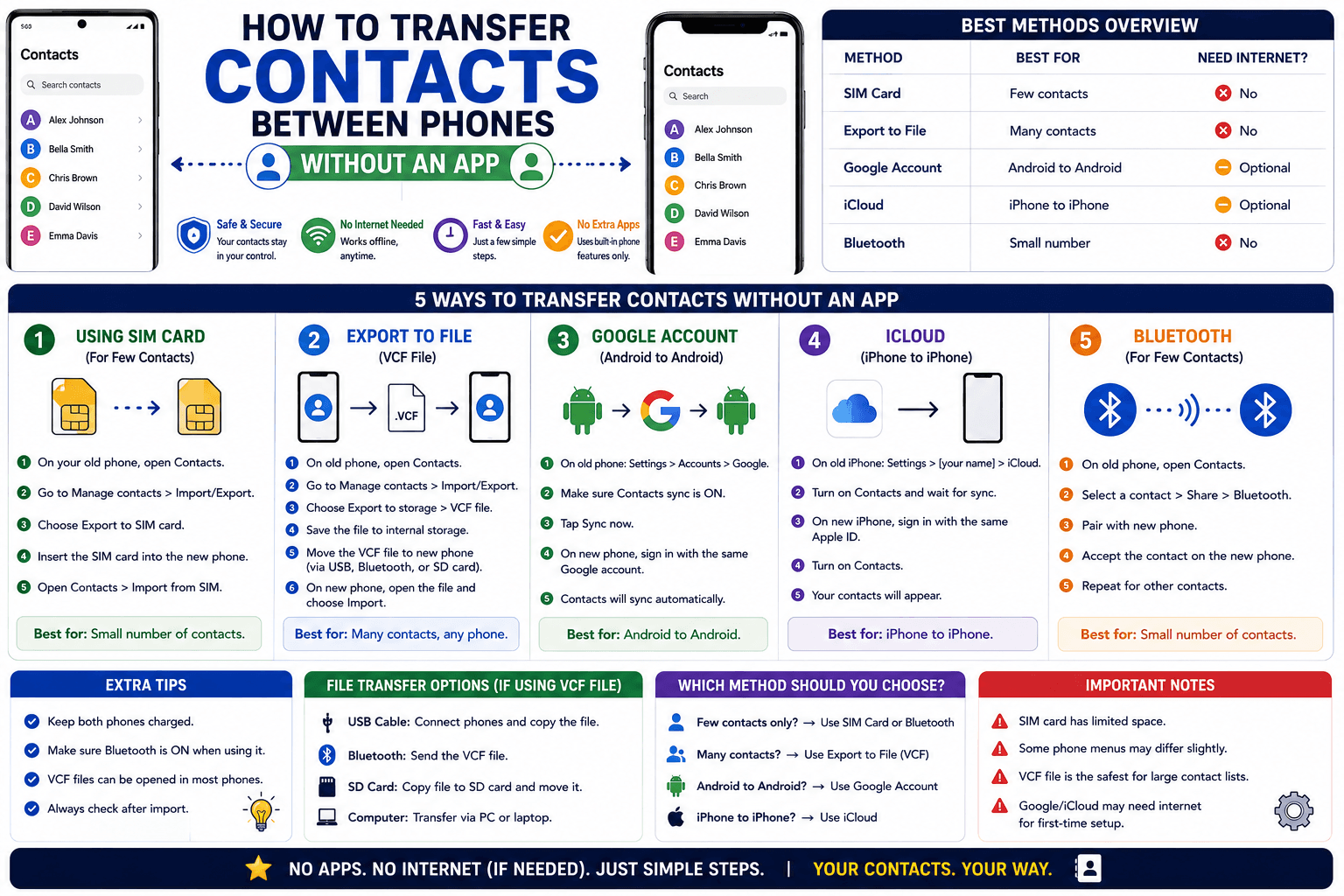
How to Transfer Contacts Between Phones Without an App
Moving to a new phone does not require a third-party transfer app. Here is how to move contacts using built-in sync or a quick vCard file export.
Read article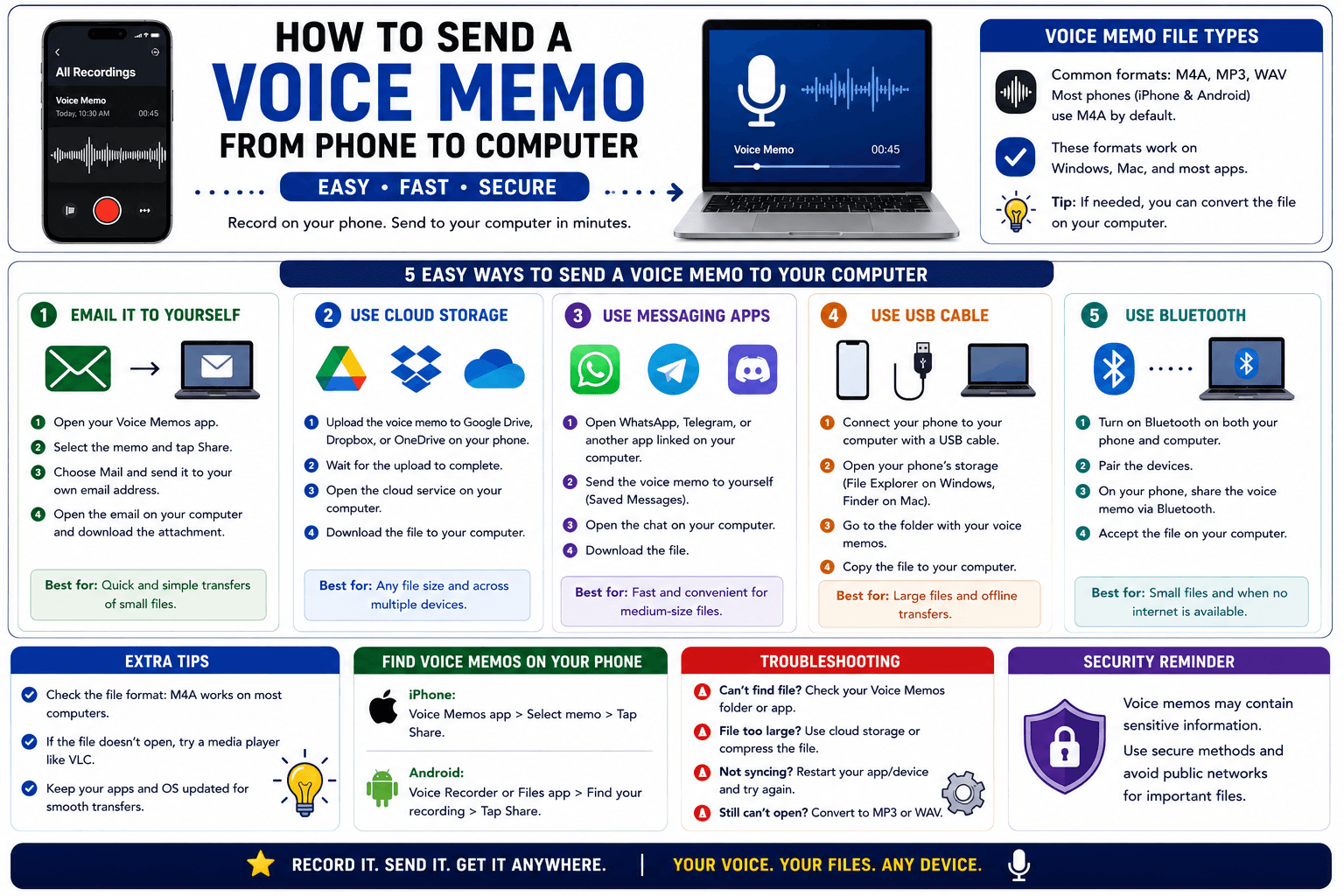
How to Send a Voice Memo From Phone to Computer
Voice memos are locked inside their app until you export them. Here is how to move a recording from your phone to your computer quickly once exported.
Read article