
How to Transfer Photos From iPhone to Windows PC Without iTunes
You just want your photos off your iPhone and onto your Windows computer. Instead, iTunes wants you to sign in, wait for it to index your entire library, and then still somehow makes the process feel harder than it should be. iTunes is not the only way to move photos from an iPhone to a Windows PC — here are the methods that actually skip it.
Why iTunes feels like the wrong tool for this
iTunes (or the Apple Devices app on newer Windows systems) was built primarily for syncing music, apps, and backups — photo transfer is almost an afterthought bolted onto a much heavier piece of software. For someone who just wants a handful of photos off their phone, launching iTunes is a lot of overhead for a small task.
Option 1: The built-in Windows Photos app (no iTunes required)
Plug your iPhone into your Windows PC with a USB cable, and Windows should recognize it as a connected device without needing iTunes installed at all. Open the Photos app, choose "Import," select your iPhone, and pick which photos to bring over. This works using Windows' native MTP (media transfer protocol) support and bypasses iTunes entirely.
Option 2: File Explorer, directly
With your iPhone connected by cable, open File Explorer, and your phone should appear as a device in the sidebar. Navigate into the DCIM folder, and you can drag photos straight onto your desktop or into any folder — no import wizard, no software beyond what Windows already has.
Option 3: A wireless transfer, no cable at all
If your iPhone and Windows PC are both on the same Wi-Fi, a browser-based tool like CopyPaster skips the cable entirely.
Step by step
- Connect your iPhone and Windows PC to the same Wi-Fi network.
- Open CopyPaster in Safari on your iPhone and in a browser on your PC.
- Switch to the Files tab and upload the photos from your iPhone.
- Download them on your Windows PC — done, without a cable or iTunes anywhere in the process.
This is especially useful when you only need a handful of specific photos rather than your entire camera roll, since there is no import wizard to navigate through first.
Option 4: iCloud for Windows
If you already use iCloud Photos, installing iCloud for Windows lets your photos sync automatically to a folder on your PC in the background, without any manual transfer step at all going forward. This is the best option if you want an ongoing, hands-off sync rather than a one-time transfer.
Which option to pick
- A handful of specific photos, right now, no cable — CopyPaster over Wi-Fi.
- Your whole camera roll, one time, cable available — Windows Photos app or File Explorer.
- Ongoing, automatic sync going forward — iCloud for Windows.
Tip: if Windows does not recognize your iPhone when connected by cable, check that you tapped "Trust This Computer" on your iPhone screen after plugging in — this prompt is easy to miss and blocks the connection until confirmed.
The bottom line
iTunes is the default answer, not the only one. Windows' built-in Photos app, File Explorer, a wireless transfer over Wi-Fi, or iCloud for Windows all get photos off an iPhone and onto a Windows PC without ever opening iTunes.
Frequently Asked Questions
QHow do I transfer photos from iPhone to Windows without iTunes?
Use the built-in Windows Photos app or File Explorer over a USB cable, use iCloud for Windows for automatic syncing, or use a wireless browser-based tool like CopyPaster if both devices are on the same Wi-Fi.
QWhy does Windows not recognize my iPhone when I plug it in?
Check that you tapped Trust This Computer on your iPhone after connecting the cable, since this confirmation is required before Windows can access the device.
QCan I transfer iPhone photos to a Windows PC without a cable?
Yes, a browser-based file-sharing tool works over Wi-Fi without any cable, as long as both the iPhone and the Windows PC are connected to the same network.
Related articles
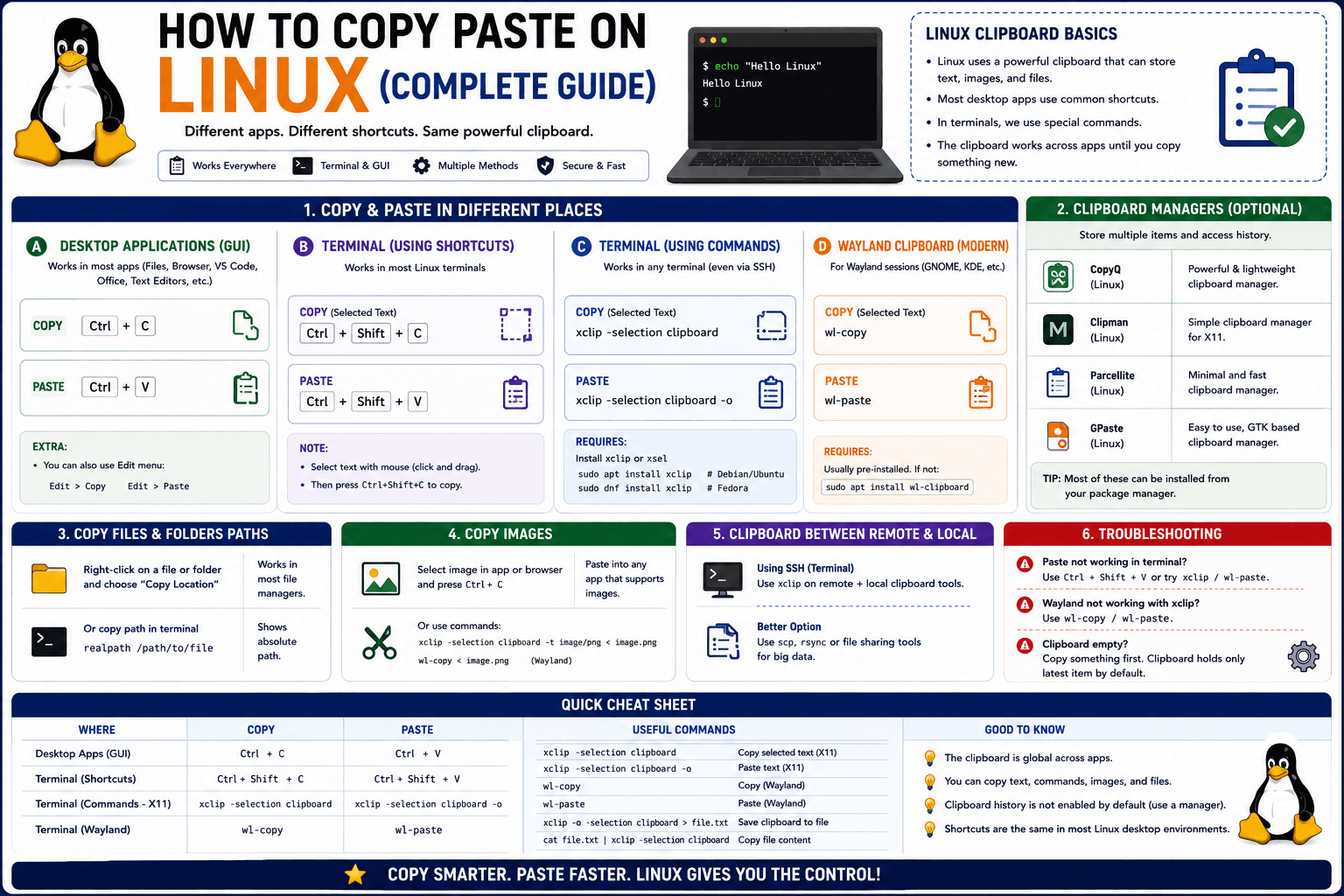
How to Copy Paste on Linux (Complete Guide)
Linux quietly runs two separate clipboards at once. Understanding both explains most copy-paste confusion, plus how to sync with other operating systems.
Read article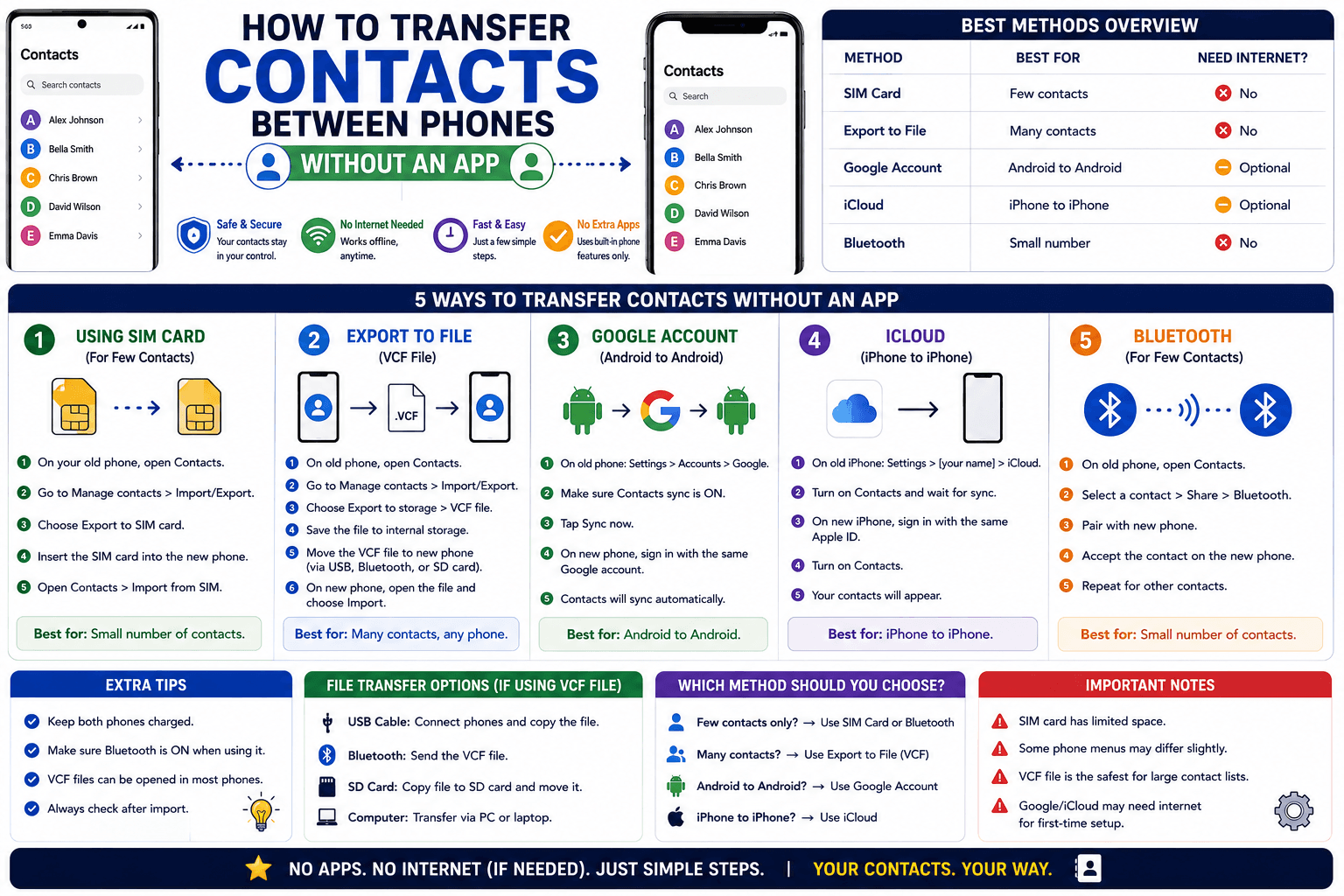
How to Transfer Contacts Between Phones Without an App
Moving to a new phone does not require a third-party transfer app. Here is how to move contacts using built-in sync or a quick vCard file export.
Read article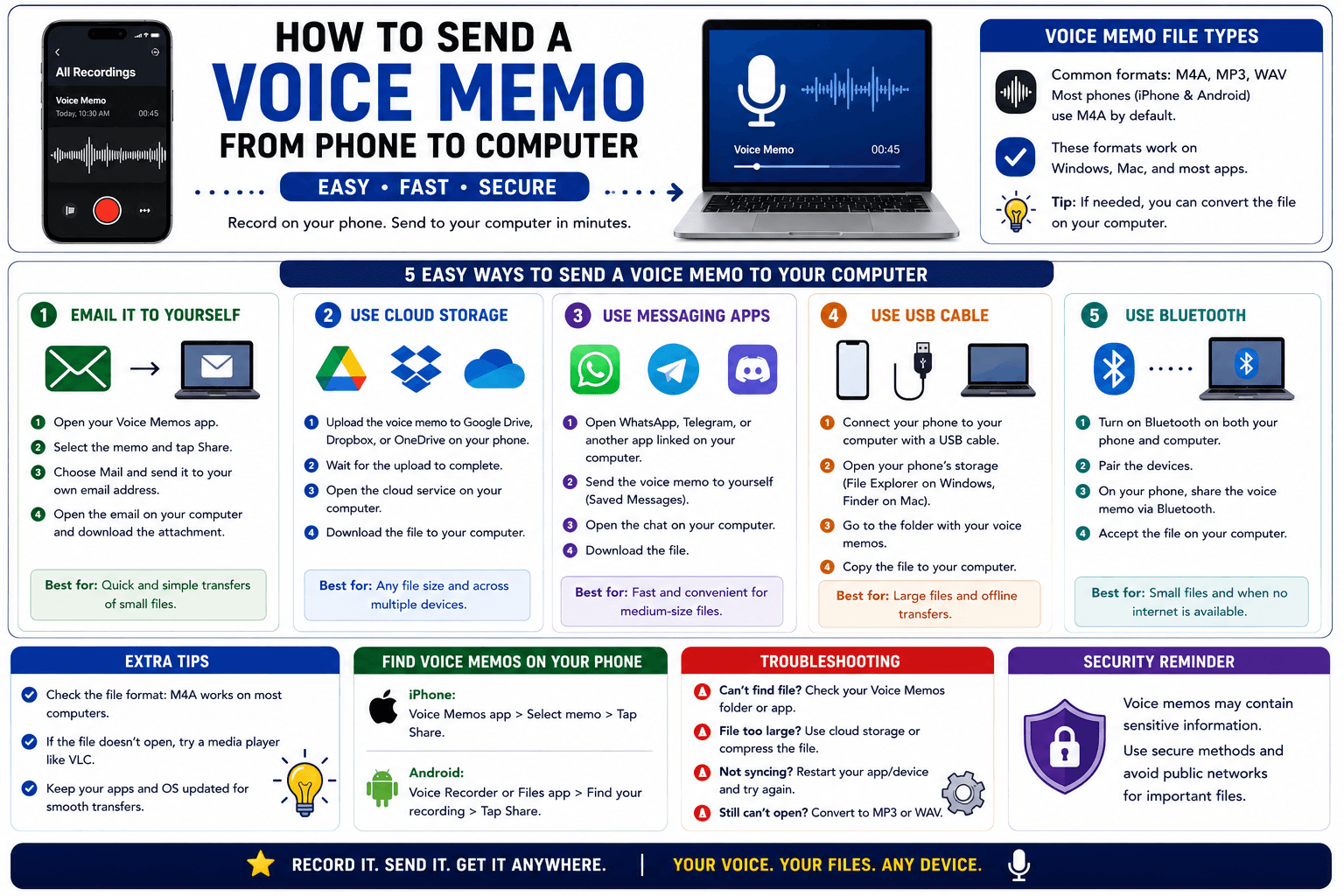
How to Send a Voice Memo From Phone to Computer
Voice memos are locked inside their app until you export them. Here is how to move a recording from your phone to your computer quickly once exported.
Read article